Retail Store Grand Opening Ideas
Retail grand opening ideas should bring shoppers inside, give them something to do and make the first purchase easy. Good options are product demonstrations, local-maker partnerships, a clear first-purchase or sign-up offer, a strong window and entrance display, and a plan for crowds in a small space. Write offer terms plainly and include an end date.
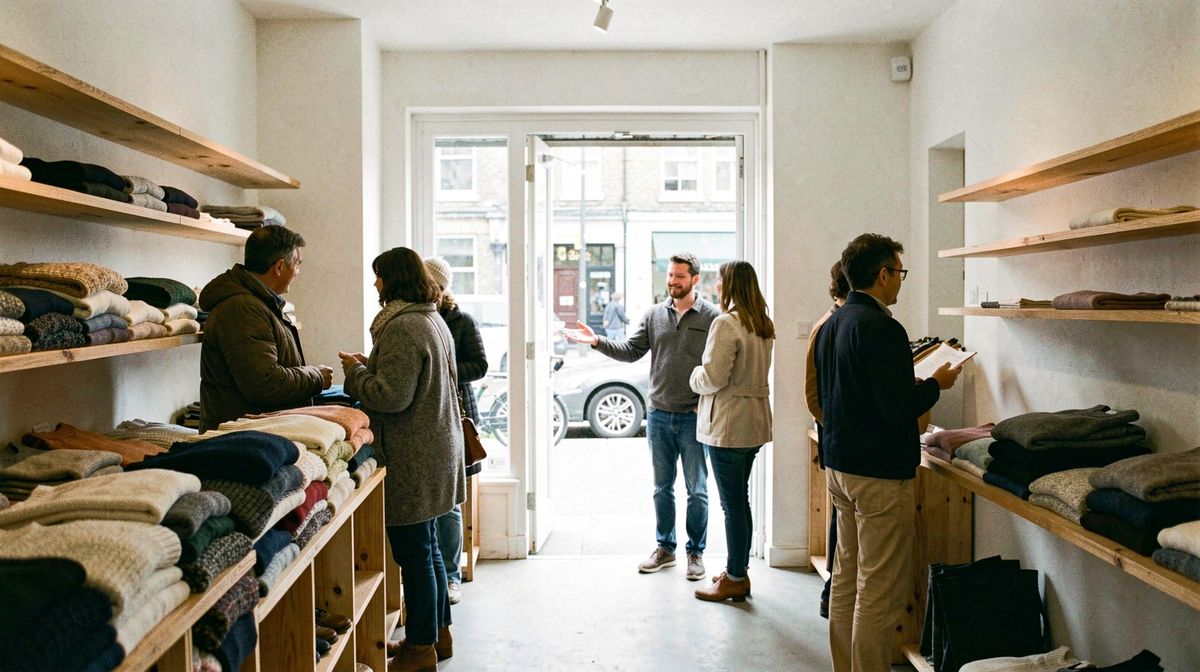
Part of our guide: Grand Opening Ideas: 30 Ways to Draw a Crowd
What retail grand opening ideas work in a physical store?
The best retail ideas get shoppers through the door, give them a reason to stay and make buying simple. This page narrows the main ideas page list to shops. For a week-long sequence rather than an idea list, see store launch playbook.
What about demos, trunk shows and local-maker partnerships?
- Product demonstrations: show how an item works, one station at a time.
- Trunk-show style visits: a guest brand or maker brings a limited selection for a day. Keep the arrangement in writing.
- Local-maker table: neighbors who make goods share your audience.
- Styling or fitting hour: short, scheduled and staffed.
What first-purchase and sign-up offers work?
Offers should be simple and honest:
- A small welcome gift with a first purchase.
- A first-visit offer with a stated end date.
- A sign-up that earns something now, with a clear note on what you will send.
The FTC says qualifying terms must be clear and conspicuous, and an ad is deceptive if it likely misleads on something material. Do not call it a “going out of business” or “clearance” event unless that is true. For prize drawings, see giveaway ideas.
How do window and entrance displays help?
The entrance is your first impression. Keep it clear, lit and uncluttered. Use one theme, a few focal items and a visible opening date. Match the look to your brand, and see decoration ideas for placement and sign-rule notes.
What ideas suit boutiques and small shops?
- Appointment slots for private browsing.
- A “first look” evening for neighbors and nearby workers.
- A small refreshment table where local rules allow.
- A photo corner built from your own displays.
- A wishlist card shoppers can fill in.
Which ideas fit a season?
Link the idea to the time of year without overpromising: a seasonal display in the window, a themed gift table, or a weather-aware plan (indoor activities in cold or wet weather). Check the date against local events so you do not compete with a larger one.
How do you choose which ideas to run?
You will not run every idea, and you should not. Pick by asking three questions of each one.
- Does it fit what you sell? A demonstration suits a product that needs explaining. A styling hour suits a store where fit and look matter.
- Can your team run it without leaving the floor uncovered? Shoppers should never wait at an unstaffed counter because the team is busy with an activity.
- Will it still make sense after the day? An idea that collects sign-ups or starts a conversation keeps working. One that only fills the room for an hour does not.
Choose two or three, run them well and write down what happened for next time.
A practical walk-through of the shopper’s visit
Picture a first-time shopper and follow them. They notice the entrance, step in, look for something that explains what you sell, browse, ask a question and reach the checkout. Each step is a chance for the day to go well or badly. Check that the door is easy to open, a staff member greets people without hovering, price tags are readable, and the checkout is easy to find. Fix the smallest friction first.
Questions to ask before you commit
- Who is staffing each activity, and who is covering the floor?
- What happens if it rains, or if far more or far fewer people arrive than you expect?
- Are there written terms for any offer, partner arrangement or sign-up?
- Does your landlord or local authority need to be told about anything outside the door?
What should you avoid?
- Crowding. Plan staffing and a capacity cap. Ask your fire marshal about limits.
- Unclear offer terms. Put dates and conditions beside the offer.
- Blocked paths. The ADA expects public businesses to remove barriers when readily achievable.
- Unrehearsed checkout. Test it first; see retail soft opening.
Tally categories with the budget estimator, then promote with the marketing plan. This is general information, not legal advice.
Quick answers
What are good grand opening ideas for a retail store?
Strong retail ideas include product demonstrations, a local maker or partner table, a clear first-purchase or sign-up offer, an eye-catching window display and a small photo area. Pick two or three that suit your space, brief staff, and put the dates and terms on a visible sign so shoppers know what applies.
How do you attract customers to a new shop?
Tell people nearby before opening: invitations to neighbors, posts with the date, email to those who asked, and flyers with permission. Then give a reason to come in the first days, such as an opening offer or a demonstration. A soft opening beforehand also helps build early word of mouth.
Should you discount at a retail grand opening?
A discount is one option, not a requirement. You can also offer a small gift, an extra service or a sign-up bonus. If you discount, state the terms and end date, and make sure any comparison price is truthful. The FTC applies the same truthfulness standards to sale prices as to other claims.
What do small shops do for a grand opening?
Small shops usually combine personal invitations, a short demonstration or local maker table, a modest offer and a welcoming entrance. Because space is limited, they often stagger visits across a weekend or run appointment slots, rather than relying on one big crowd.
How do you handle a crowd in a small store?
Plan for it before the day. Keep the entrance and aisles clear, put the checkout away from the door, assign a greeter and a floor helper, and decide how many people can browse comfortably at once. If lines form, move them outside only where local rules and weather allow. Ask your fire marshal about occupancy limits.