Grand Opening Marketing Plan: Step by Step
A grand opening marketing plan sets a goal and audience, then schedules messages before, during and after the event across a few channels: signage, local listings, social posts, email, partnerships and local press. It states the offer plainly, follows basic advertising rules, splits the budget by category rather than by guess, and tracks a few results so you can improve next time.

What is your marketing goal and audience?
Start by naming one goal and one audience. A goal might be first visits, sign-ups or press interest; the audience might be nearby residents, local workers or families. Everything else follows. The SBA says a plan’s marketing section should describe how you will attract and retain customers, and that no single approach fits every business. For the event itself, see more ideas for opening day and the grand opening plan.
What is the before, during and after timeline?
| Phase | What to do |
|---|---|
| Before | Announce the date, tell neighbors, start a sign-up list, print flyers, confirm partners |
| During | Keep signs visible, post updates, greet visitors, collect sign-ups |
| After | Thank people, follow up with those who signed up, review results |
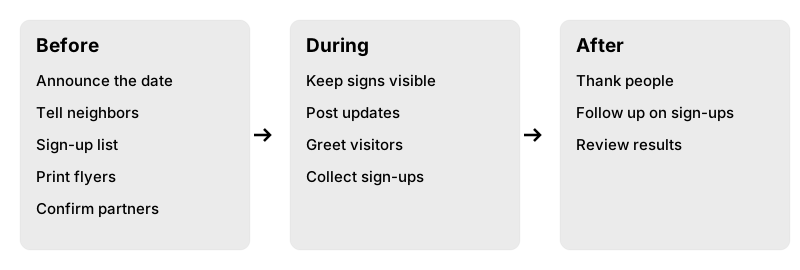
The timing is a desk planning convention. Adjust it to your market and calendar.
Which channels can you use?
Names below are generic channels, not products.
- Signage: a clear sign at your location, subject to local sign rules.
- Local listings: make sure your business hours and address are correct in the places people look.
- Social posts: date, offer, place, a reason to come.
- Email: only people who asked to hear from you.
- Partnerships: nearby businesses share each other’s date.
- Local press: a short, factual announcement with who, what, when and where.
- Flyers and invitations: see the flyer guide and invitation wording.
What message and offer should you use?
Say what is new, who it is for and why to come now. Keep one main message and one main offer. Put the date, time and place in every piece.
What advertising rules apply?
Advertising must be truthful. The FTC’s small business guide says ads must be truthful and non-deceptive and that you need a reasonable basis before a claim runs. Qualifying terms must be clear and conspicuous, close to the claim, not hidden in fine print. Do not say “going out of business” unless true. If you use endorsers or reviews, the FTC says endorsements must reflect the endorser’s honest experience and that paid endorsements must be disclosed (same advertising FAQs). This is general information, not legal advice.
What does a one-page plan look like?
Copy this outline:
- Goal: (one line)
- Audience: (one line)
- Date, time, place: (exact)
- Offer and terms: (what, who, when it ends)
- Channels: (three to five)
- Calendar: (before, during, after)
- Budget categories: (see below)
- Measures: (three)
- Owner for each task
How do you split the budget and track results?
Budget by category, not by invented percentages: printing and signage, advertising, giveaways, partner costs, staff hours and a contingency line. The SBA’s list of startup costs names advertising and marketing and printed marketing materials. Enter your own amounts in the budget estimator. Track results with the measures from your plan.
What mistakes should you avoid?
- Starting late. People need notice.
- A vague offer. State what and until when.
- No follow-up. The week after is where repeat visits begin.
- Promising what you cannot supply. Test with a soft opening.
- Inconsistent details. Check that the date and address match everywhere.
For ready-made text blocks to adapt, see the flyer wording examples, and for neighbor-first tactics see ideas for small businesses.
Quick answers
How do you promote a grand opening?
Set a goal, then tell people in several places with the same details: date, time, address and offer. Use signage, local listings, social media, email to people who asked, partner businesses and local press. Start before the event, keep posting through it and follow up afterward. Keep every claim true and every offer's terms clear.
How far in advance should you start marketing a grand opening?
It varies with your business and market. Many owners begin teasers a few weeks ahead, send invitations and flyers closer in, and post reminders in the final days. Start earlier if you need partners or press, and align with your permits so you do not announce something you cannot yet do.
What is the best way to advertise a grand opening on a budget?
Use channels that cost effort rather than money: personal invitations, posts on your own social accounts, email to people who asked, partner cross-promotion and a sign at your location where rules allow. Add paid items only if you can track results. List cost categories and enter your own amounts in the budget estimator.
Should you use social media for a grand opening?
Usually yes, because it is cheap and reaches nearby people. Post the date, the offer and a reason to come, show the space or product, and reply to comments. Add the address and hours to every post. Use only photos you have permission to share, and follow the FTC's guidance if you work with endorsers.
How do you measure grand opening marketing?
Pick a few simple measures tied to your goal: visitors on key days, sign-ups collected, offers redeemed, and how people say they heard about you. Ask at the door or on a sign-up form. Compare results to your own plan rather than to an outside average, and note what to change next time.
Where this comes from
- SBA: Write your business plan (sba.gov)
- SBA: Calculate your startup costs (sba.gov)
- FTC: Advertising FAQs, a guide for small business (ftc.gov)
- FTC: Advertising and marketing (ftc.gov)